scroll down for English
THE NĀṬYA MANDIR - Erste Schule für Bharatanāṭyam-klassischer südindischer Tanz in Wien
Kurzbeschreibung des Nāṭya Mandir Verein
Geschichte
Der Nāṭya Mandir Verein ist seit seiner Gründung ein zentraler Ort in Wien für die Vermittlung, Pflege und zeitgenössische Weiterentwicklung der indischen klassischen Tanz- und Performance-Traditionen. Im Mittelpunkt steht die künstlerische, pädagogische und interkulturelle Arbeit rund um den klassischen südindischen Tanz Bharatanāṭyam.
Das Nāṭya Mandir Studio wurde 1999 als professioneller Raum für Proben, Studioaufführungen und Unterricht gegründet. Es verfügt über die dafür notwendigen Nebenräume und Infrastruktur. Das Studio wurde von der Architektin Maria Schmid-Miejska, der Mutter von Rādhā Añjali, entworfen. Mit großem persönlichem Einsatz sowie mit Unterstützung der Kulturabteilung der Stadt Wien konnte dieses Projekt als nachhaltiger Kulturort realisiert werden.
Die feierliche Eröffnung des Studios erfolgte im Jahr 1999 durch Dr. Bimal Kundu und Guru Adyar K. Lakshman. Seit der Eröffnung ist Nāṭya Mandir als eingetragener Verein tätig und engagiert sich kontinuierlich für Kulturarbeit, Bildungsangebote und künstlerische Produktion.
Schwerpunkte
Nāṭya Mandir vereint mehrere Schwerpunkte, die einander ergänzen:
- Kulturelles Erbe und künstlerische Exzellenz
Nāṭya Mandir versteht sich als Ort der fundierten Pflege klassischer Formen. Dazu gehören Unterricht und künstlerische Forschung zu Technik, Rhythmus, Stilistik, Repertoire (klassische Kompositionen) und Ästhetik des Bharatanāṭyam. - Kulturelle Vielfalt und interkultureller Dialog
Die Aktivitäten des Vereins sind in Wien verankert und fördern die Begegnung unterschiedlicher kultureller Hintergründe. Durch künstlerische Projekte, Performances und Kooperationen entsteht ein Dialog zwischen indischer Tradition und europäischer Kulturlandschaft. - Zeitgenössische Programmatik / Gegenwartsbezug
Neben der Tradition steht die Weiterentwicklung im Zentrum: Nāṭya Mandir ermöglicht auch künstlerische Arbeiten, in denen klassische Mittel in Beziehung zu gegenwärtigen gesellschaftlichen Fragestellungen gesetzt werden. - Bildungs- und Nachwuchsarbeit
Die Arbeit mit Kindern, Jugendlichen und Erwachsenen – vom Einstieg bis zur fortgeschrittenen künstlerischen Ausbildung ist Schwerpunkt des Unterrichts. Nāṭya Mandir unterstützt Lernende dabei, Tanz als Ausdrucksform und Bühnenkunst zu verstehen.
Inhaltliche Programmatik
Die Programmatik basiert auf einer ganzheitlichen Auffassung von Tanz als Kunst, Wissen und kultureller Praxis. Dies umfasst:
- Regelmäßige Kurse und Trainings (Technik, Ausdruck, Rhythmus, Theorie)
- Workshops und Intensivprogramme mit Gastkünstlerinnen und Expertinnen
- Studio-Performances als qualitätsvolle Aufführungsform in intimem Rahmen
- Künstlerische Produktionen und Präsentationen, die traditionelle und zeitgenössische Formate verbinden
- Vermittlungsformate (Einführungen, Publikumsgespräche, Lecture Demonstrations), die kulturelle Hintergründe sichtbar machen
Ein besonderes Profil von Nāṭya Mandir ist die Verbindung von künstlerischer Praxis mit reflektierter Vermittlung: Inhalte werden nicht nur präsentiert, sondern in einen Kontext gestellt – historisch, ästhetisch und gesellschaftlich.
Referenzen zu bisherigen Arbeiten und Leistungen
Nāṭya Mandir blickt auf eine langjährige, kontinuierliche Tätigkeit in Wien zurück. Zu den Leistungen zählen insbesondere:
- Aufbau und Betrieb eines spezialisierten Tanzstudios als dauerhafter Kulturort
- Durchführung regelmäßiger Ausbildungsprogramme und Probenarbeit
- Organisation von Studioaufführungen und Bühnenformaten
- Zusammenarbeit mit renommierten Künstlerpersönlichkeiten der indischen klassischen Szene
- nachhaltige Beiträge zur kulturellen Vielfalt Wiens durch interkulturelle Kulturarbeit
- Zahlreiche Tanzprojekte, die in Wien und Indien zur Aufführung kamen mit Themen, die gegenwärtig relevant sind. Z.B Themen die Umwelt betreffend (Vrkśa-Der Baum) Genderthema (Śikhandi), Geschichten von Krieg und Frieden (Mahabharata)
- 38 Arangetrams (Solotanzdebut einer Schülerin) in den Jahren von 1986-2023
Nāṭya Mandir steht damit für eine kulturelle Praxis, die Authentizität, Qualität und Öffnung verbindet: Tradition wird nicht museal verstanden, sondern als lebendige Kunstform in der Gegenwart verankert.
Verantwortliche Personen des Vereins
Rādhā Añjali, Kurzbiografie
Künstlerische Leitung / Tanzpädagogik / Programmgestaltung
Rādhā Añjali ist Tänzerin, Tanzpädagogin und künstlerische Leiterin von Nāṭya Mandir in Wien. Ihre Arbeit verbindet die fundierte Praxis des indischen klassischen Tanzes (Bharatanāṭyam) mit langfristiger Vermittlungsarbeit und interkultureller Programmentwicklung. Im Zentrum steht die Pflege traditioneller Repertoires sowie die zeitgenössische Kontextualisierung klassischer Ausdrucksformen in einem europäischen Kulturraum. Sie leitet Unterricht, Probenprozesse, Ausbildungsformate und künstlerische Projekte und verantwortet die inhaltliche Ausrichtung von Nāṭya Mandir.
Radha Anjali wird in ihrer Arbeit von ihrem Mann Jalil Saber Zaimian in allen organisatorischen und künstlerischen Belangen unterstützt. Weitere aktive Mitglieder des Natya Mandir sind: Dr. Eva Schober (Natya Mandir News Zeitungsgestaltung), Regina Leibetseder Löw (Musikarchiv) und Dr. Asmita Banerjee (Regie Assistenz, Projektentwicklung).

THE NĀṬYA MANDIR ASSOCIATION - First school for Bharatanāṭyam - classical South Indian dance in Vienna
Nāṭya Mandir was founded by the dancer Rādhā Añjali, the architect Jalil Saber Zaimian and the pianist Djiwa Jenie in Vienna in 1983. Dance performances in the classical South Indian dance style Bharatanāṭyam, concerts for classical Indian music, lectures and exhibitions on Indian arts and culture as well as dance classes and dance workshops for students of all ages are being organised. Bharatanāṭyam has found a home in the heart of Europe. Initiated by the Indian dancer late Kama Dev, who gave dance classes already in 1978 at the Dramatisches Zentrum Wien and Rādhā Añjali became his student. Nāṭya Mandir - which means in Sanskrit "Place for the Dance" - is a non-profit organisation based in Vienna, Austria.
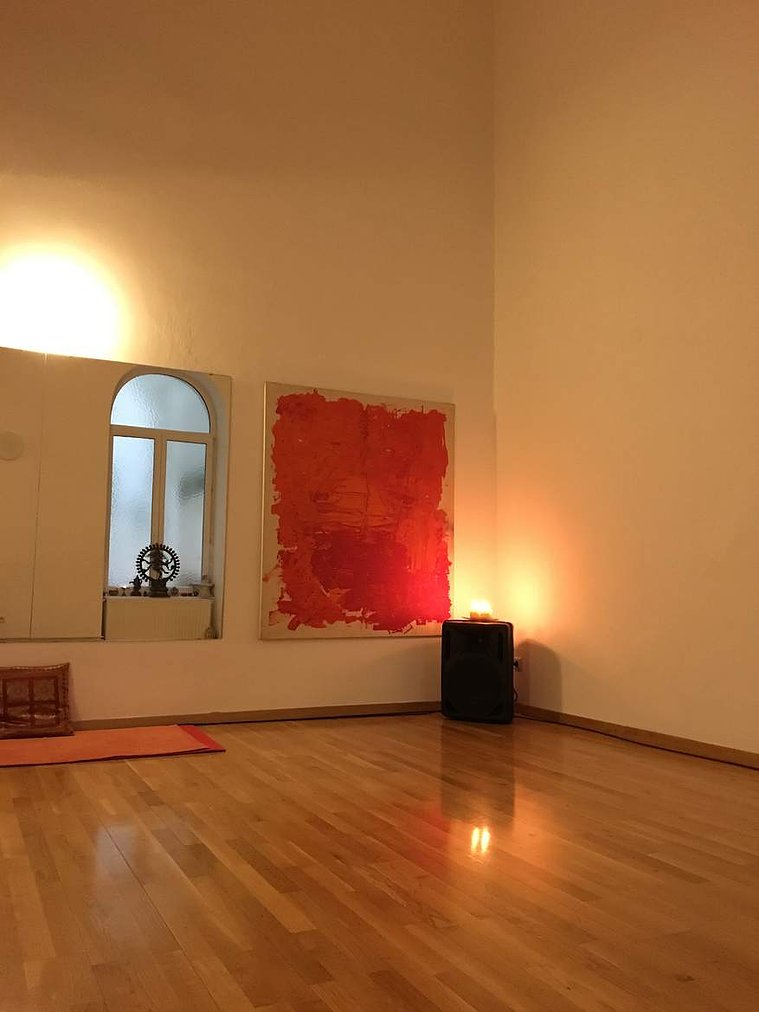
THE NĀṬYA MANDIR STUDIO
The Nāṭya Mandir Studio is a space for classes, rehearsals and studio performances with all necessary side rooms.
It was designed by Rādhā Añjalis mother architect Maria Schmid-Miejska. With great personal effort and with the support of the cultural office of the City of Vienna.
The Studio was inaugurated by Dr. Bimal Kundu and Guru Adyar K. Lakshman in 1999. Since then Nāṭya Mandir is a registered association.
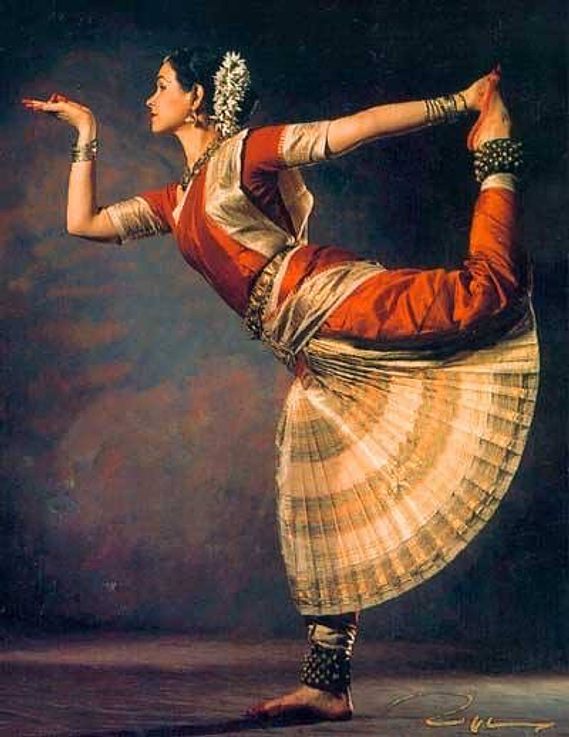
Rādhā Añjali in Nāṭarāja pose from the dance "anandanatamaduvar tillail" describing Śivas cosmic dance.
Short Description of the Nāṭya Mandir Association
History – Focus Areas – Programmatic Approach – References – Activities
The Nāṭya Mandir association has, since its founding, been a central institution in Vienna for the teaching, preservation, and contemporary development of Indian classical dance and performance traditions. At its core lies artistic, pedagogical, and intercultural work centered on the South Indian classical dance form Bharatanāṭyam.
History and Foundation
The Nāṭya Mandir Studio was established in 1999 as a professional space for rehearsals, studio performances, and teaching. It is equipped with the necessary facilities and infrastructure to support these activities. The studio was designed by architect Maria Schmid-Miejska, the mother of Rādhā Añjali. Through significant personal commitment, as well as support from the Cultural Department of the City of Vienna, the project was realized as a sustainable cultural venue.
The studio was officially inaugurated in 1999 by Dr. Bimal Kundu and Guru Adyar K. Lakshman. Since its opening, Nāṭya Mandir has operated as a registered association, continuously engaged in cultural work, educational programs, and artistic production.
Core Areas of Work
Nāṭya Mandir integrates several complementary areas of focus:
Cultural Heritage and Artistic Excellence
Nāṭya Mandir is dedicated to the rigorous cultivation of classical forms. This includes teaching and artistic research in technique, rhythm, stylistics, repertoire (classical compositions), and the aesthetics of Bharatanāṭyam.
Cultural Diversity and Intercultural Dialogue
Rooted in Vienna, the association promotes encounters between diverse cultural backgrounds. Through artistic projects, performances, and collaborations, it fosters dialogue between Indian traditions and the European cultural landscape.
Contemporary Orientation
Alongside tradition, development is central: Nāṭya Mandir supports artistic work that relates classical forms to contemporary social questions—such as identity, belonging, social roles, spirituality, ethics, and embodied knowledge.
Education and Training
A key component of the association’s work is sustained engagement with children, youth, and adults—from beginners to advanced artistic training. Nāṭya Mandir encourages participants to understand dance as a cultural practice, a form of expression, and a performing art.
Programmatic Approach
The program is based on a holistic understanding of dance as art, knowledge, and cultural practice. This includes:
- Regular classes and training (technique, expression, rhythm, theory)
- Workshops and intensive programs with guest artists and experts
- Studio performances as high-quality presentations in an intimate setting
- Artistic productions and presentations combining traditional and contemporary formats
- Educational formats (introductions, audience talks, lecture-demonstrations) that make cultural contexts visible
A distinctive feature of Nāṭya Mandir is the integration of artistic practice with reflective mediation: works are not only presented but contextualized—historically, aesthetically, and socially.
References and Achievements
Nāṭya Mandir has a long-standing and continuous presence in Vienna. Its achievements include:
- Establishing and operating a specialized dance studio as a permanent cultural venue
- Conducting regular training programs and rehearsal processes
- Organizing studio performances and stage productions
- Collaborating with renowned artists from the Indian classical dance field
- Contributing sustainably to Vienna’s cultural diversity through intercultural artistic work
- Numerous dance projects performed in Austria and India, addressing contemporary themes. Examples include environmental issues (Vrkśa – The Tree), gender issues (Śikhandi), and stories of war and peace (Mahābharata).
- 38 Arangetrams (solo dance debuts by students) were performed between 1986 and 2023.
Nāṭya Mandir thus represents a cultural practice that combines authenticity, quality, and openness: tradition is not treated as static heritage, but as a living art form rooted in the present.
Responsible Person of the Association
Rādhā Añjali – Short Biography
Artistic Direction / Dance Pedagogy / Program Development
Rādhā Añjali is a dancer, dance educator, and artistic director of Nāṭya Mandir in Vienna. Her work bridges the rigorous practice of Indian classical dance (Bharatanāṭyam) with long-term educational engagement and intercultural program development. At its core is the preservation of traditional repertoire alongside the contemporary contextualization of classical forms within a European cultural environment. She leads classes, rehearsal processes, training programs, and artistic projects, and is responsible for the overall conceptual direction of Nāṭya Mandir. Rādhā Añjali is supported in her work by her husband, Jalil Saber Zaimian, in both organizational and artistic matters. Other active members of Natya Mandir are: Dr. Eva Schober (Natya Mandir News newspaper design), Regina Leibetseder Löw (music archive) and Dr. Asmita Banerjee (assistant director, project development).